Committed to Protecting Forests, Triputra Agro Persada Collaborates with Panglima Pati Indigenous Forest Conservation, Jambi Province
September 2024
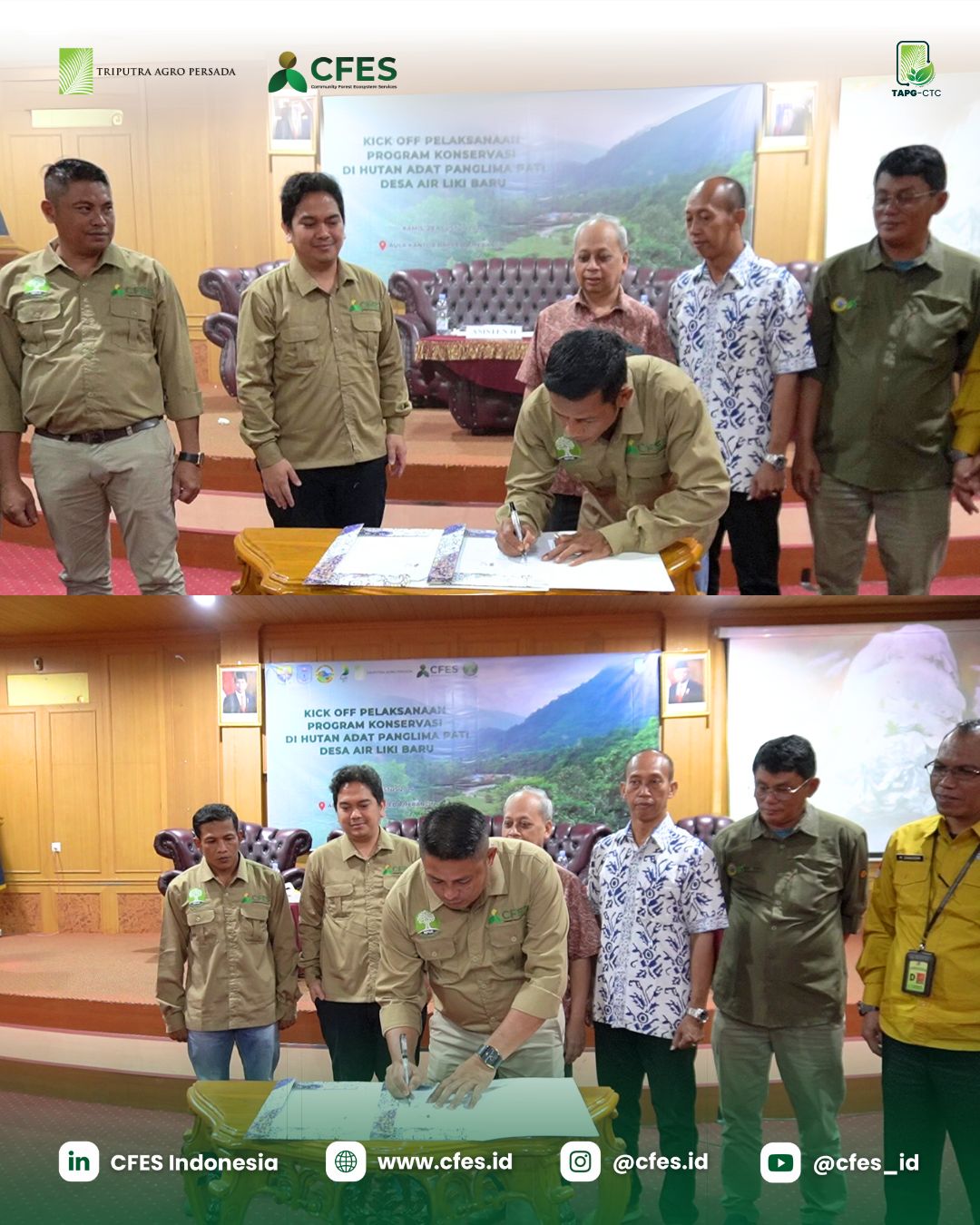
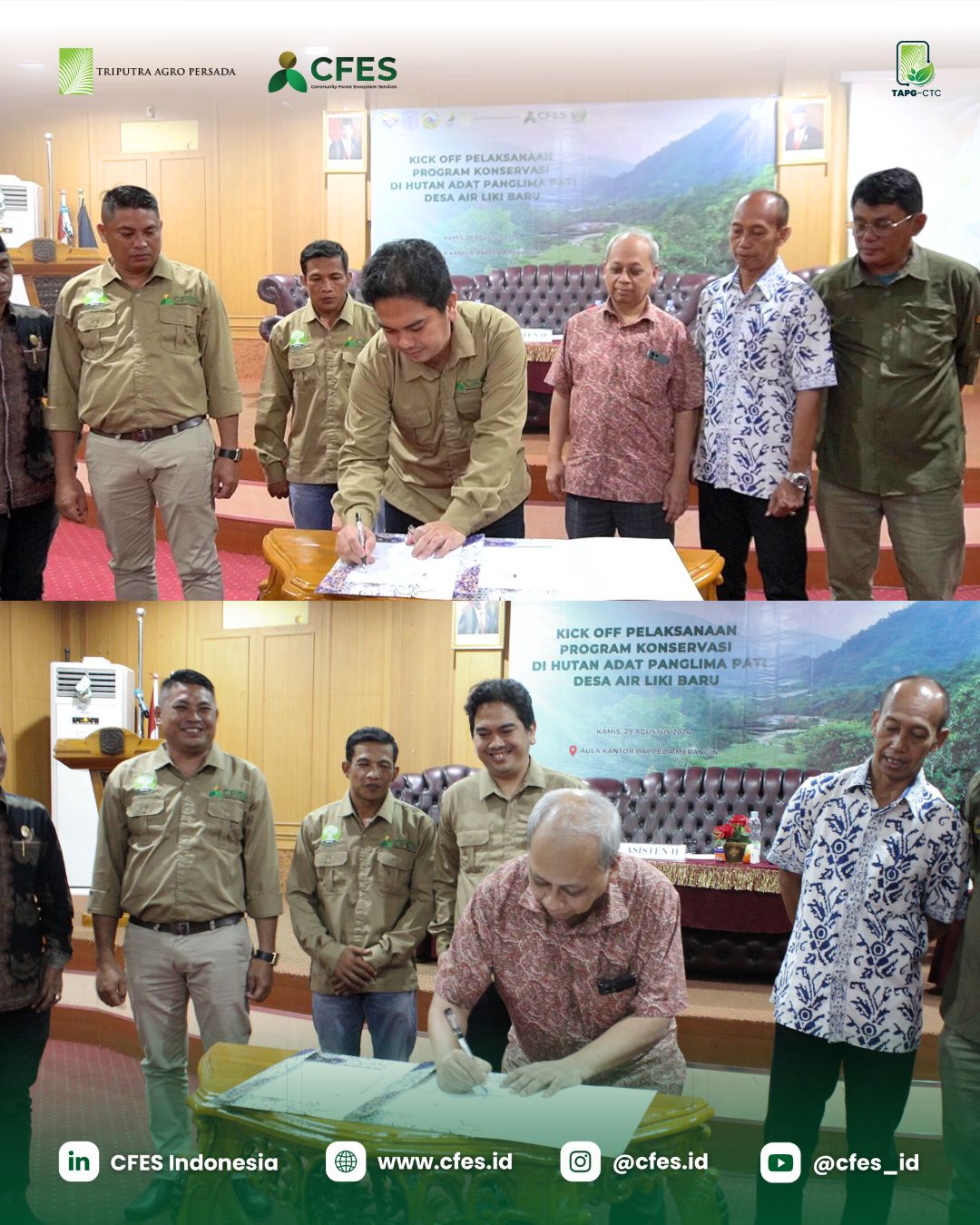

MERANGIN – PT Triputra Agro Persada Tbk (IDX: TAPG), together with Community Forest Ecosystem Services (CFES) and the Panglima Pati Customary Forest Management Institution (LPHA), officially inaugurated a long-term conservation program cooperation to support the management of the Panglima Pati Customary Forest in Air Liki Baru Village, Merangin Regency, Jambi, on Thursday (29/8/2024). This collaboration also marks the first initiative under Triputra Agro Persada Group Commit To Conserve (TAPG-CTC), reflecting the company’s commitment to environmental conservation.
The inauguration of the partnership was carried out through the signing of a memorandum of understanding between Joseph Hutabarat, Secretary of the CFES Executive Council, and Dihartoyo, Chair of LPHA Panglima Pati, witnessed by Widyantoko Sumarlin, Deputy Director of TAPG; Rusnal, Head of the Merangin Forest Management Unit (KPH); and Husni Syadri, Head of Air Liki Baru Village. The event was also attended by Suherman, Assistant II of the Merangin Regional Secretariat representing the Regent of Merangin; Nana Supriyatna, Secretary of the Merangin Environmental Agency; As’ Ari El Wakas Apuk, S.H, Member of Merangin DPRD; and M. Zainudin, S.P., representative from the TN Kerinci Seblat KLHK Regional Technical Unit (UPTD) Region I.
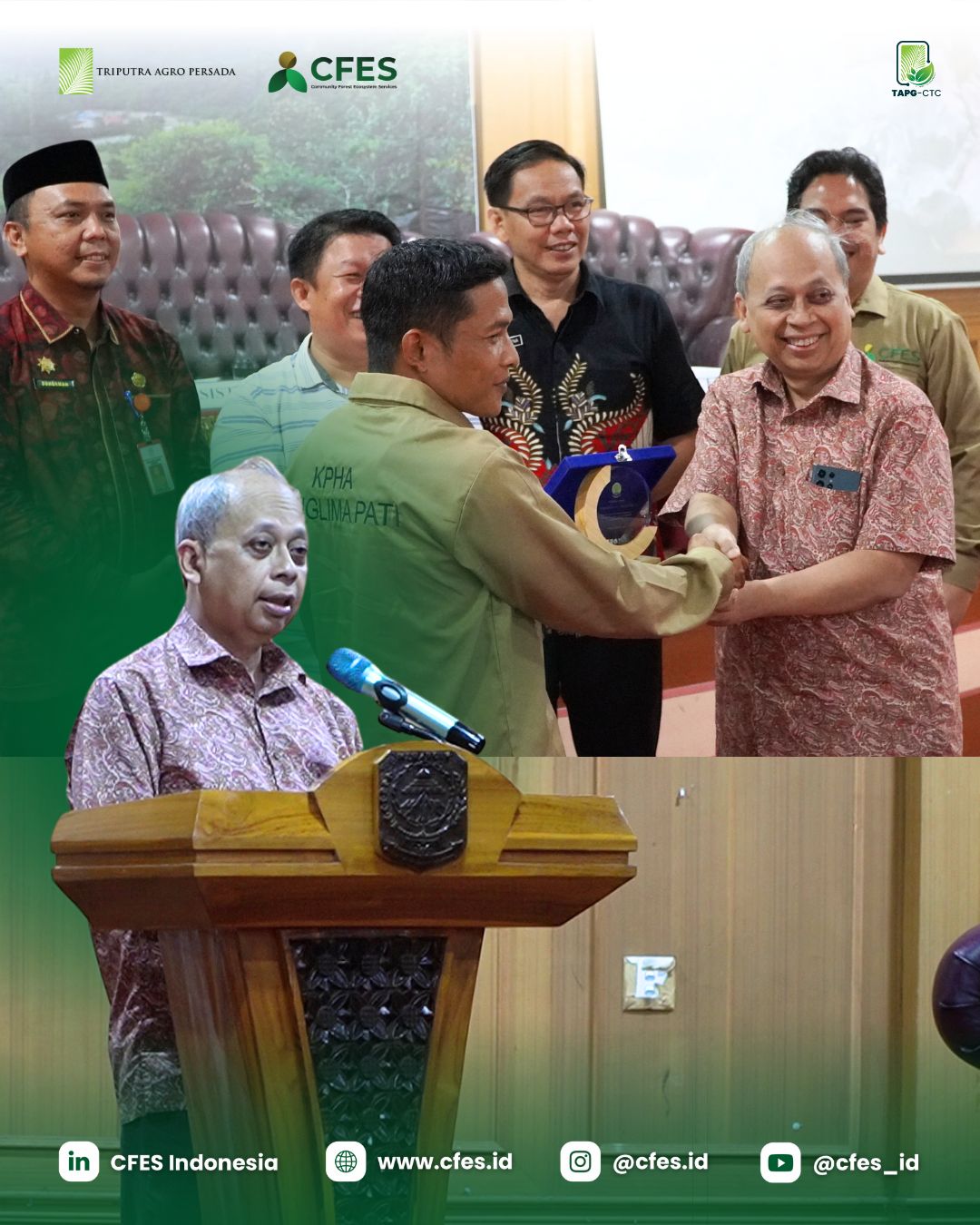
“Through this cooperation, communities will receive compensation for their conservation efforts. This is an innovative step that not only brings economic benefits but also educates the public about the importance of environmental preservation. I extend my highest gratitude and appreciation for the collaboration established between TAPG, CFES, LPHA Panglima Pati, and other stakeholders,” said Suherman, Assistant II to the Regional Secretary of Merangin, in his remarks.
He added that this conservation partnership is a significant achievement in the commitment to preserve customary forests and a form of appreciation for community contributions in conserving them. Through the social forestry model, the conservation of the Panglima Pati Customary Forest, which spans approximately 303.3 hectares, opens up opportunities for the development of non-timber forest products (NTFPs) that can increase village income while encouraging communities to safeguard the forest for the benefit of both present and future generations.
“I hope that the spirit of collaboration we are building through this program will strengthen the role of the forest, particularly the Panglima Pati Customary Forest, as a source of sustainable livelihood, and create better job opportunities for local villagers,” Suherman added.
Widyantoko Sumarlin, MPP, PhD, Deputy Director of Sustainability at TAPG, explained that the collaboration is part of TAPG-CTC, a long-term commitment by the company to conservation efforts in line with sustainable palm oil plantation standards.
“TAPG-CTC is the company’s conservation commitment carried out through a range of conservation activities, including RSPO’s RaCP program. TAPG-CTC is developed through various conservation models using a comprehensive and responsible approach to deliver fair and equitable ecological and economic benefits,” he stated.
As the inaugural project, Widyantoko added that TAPG-CTC Panglima Pati Customary Forest will receive full funding support from the company, to be channeled by CFES through an ecosystem service payment scheme (PES) to LPHA Panglima Pati as the beneficiary over the next five years. TAPG, a member of RSPO since 2007, has also developed a long-term plan to expand TAPG-CTC into other regions.
Joseph Hutabarat, Secretary of the CFES Executive Council, explained that the collaboration between TAPG through TAPG-CTC and CFES in conserving the Panglima Pati Customary Forest could serve as a good example of how palm oil companies can fulfill their conservation obligations and social responsibilities in a measurable and sustainable way.
“This cooperation will include several programs focusing on two main objectives: the protection of High Conservation Value (HCV) and High Carbon Stock (HCS) areas through necessary forest rehabilitation activities. The goal is for the Panglima Pati Customary Forest to be free from deforestation and degradation, thus delivering both intrinsic and extrinsic benefits. The other objective is to improve the living standards of Air Liki Baru Village residents through sustainable utilization of non-timber forest products,” he explained.